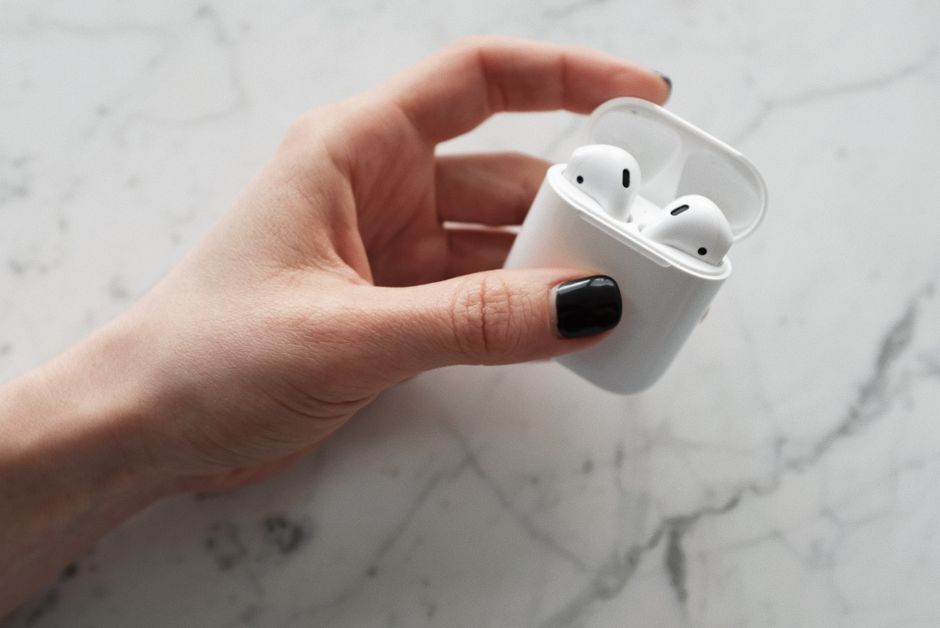
Une demande de brevet publiée le 8 janvier 2026 décrit des AirPods capables de détecter des gestes avec leurs antennes radio. L’idée pourrait réduire la latence et libérer de la place, mais elle ne correspond encore à aucun modèle annoncé.
Le tactile prend un coup d’antenne
Le premier brevet connu lié au concept des AirPods remonte à 2011. Depuis, Apple a exploré plusieurs méthodes de commande gestuelle. Les écouteurs actuels utilisent une surface tactile et des électrodes capacitives pour reconnaître les pressions ou les glissements sur leur tige.
Ce système occupe toutefois de l’espace dans un appareil qui doit déjà loger une batterie, des microphones, une puce et les composants radio. La demande de brevet pointe aussi un délai de détection jugé trop long pour certaines commandes. Quand il faut tapoter ou glisser pour changer de morceau, chaque fraction de seconde compte. Sinon, le morceau suivant part quand il veut.
Impédance, mon amour, le geste passe par la radio
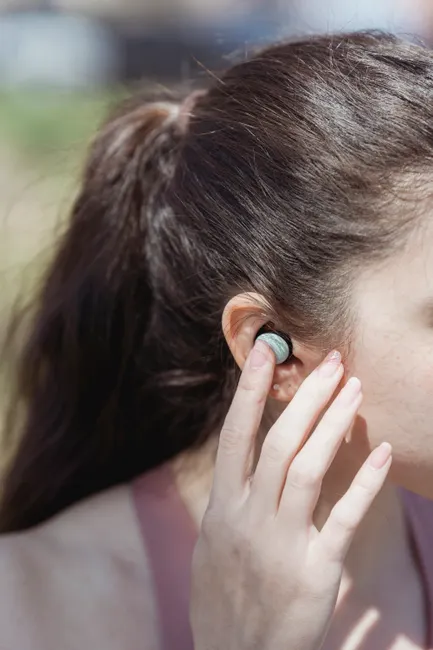
Photo de Miriam Alonso sur Pexels.
La proposition porte le nom de Gesture Detection Based on Antenna Impedance Measurements. Elle consiste à mesurer la façon dont une antenne réagit aux signaux électriques. Lorsqu’un doigt s’approche ou touche la tige, cette réaction peut changer. Le système pourrait alors détecter la présence du doigt sans ajouter d’électrode capacitive dédiée.
Les antennes des AirPods reçoivent déjà les données audio et transmettent les signaux des microphones vers l’appareil connecté. La demande de brevet souligne que ces échanges sont traités plus fréquemment que les capteurs capacitifs. L’antenne pourrait donc fournir un signal exploitable plus rapidement qu’un système tactile interrogé à un rythme inférieur.
Le bénéfice recherché tient en deux mots : moins d’espace occupé et moins de latence. Apple pourrait réorganiser l’intérieur de l’écouteur ou utiliser la place libérée pour d’autres composants. Cela ne promet pas automatiquement une meilleure autonomie. Un millimètre récupéré n’est pas une batterie gratuite, même si le marketing aimerait bien.
Un swipe, deux antennes et zéro boule de cristal
Photo de Sinan KRIYA sur Pexels.
Avec deux antennes placées dans la tige, le système pourrait analyser la vitesse de variation de l’impédance et l’ordre des changements. Cette combinaison aiderait à distinguer le début et la fin d’un mouvement, puis à en déterminer la direction.
Un glissement vers le haut pourrait ainsi être séparé d’un mouvement vers le bas ou d’un simple contact. La commande ne dépendrait plus uniquement de la présence d’un doigt : elle tiendrait aussi compte de la manière dont ce doigt se déplace. Sur le papier, cela peut limiter les gestes mal interprétés et les tapotements répétés.
La piste évite par ailleurs d’ajouter une caméra aux écouteurs. Apple a déjà étudié des systèmes de commande fondés sur l’image, mais l’antenne utilise un composant déjà nécessaire à la connexion sans fil. C’est plus discret, plus compact et nettement moins inquiétant qu’un écouteur qui chercherait à filmer son propriétaire.
La méthode décrite repose sur plusieurs indices : la présence du doigt, la vitesse de variation de l’impédance et la séquence des changements entre les antennes. La demande de brevet ne fournit pas de mesure de latence ni de taux de réussite sur un produit commercialisé.
Le brevet n’est pas une keynote
Une demande de brevet protège une solution technique, pas une feuille de route produit. Elle peut rester au stade de la recherche, être modifiée avant la fabrication ou ne jamais apparaître dans un AirPods vendu en magasin.
Dans ce cas précis, le document décrit une méthode de détection, mais ne permet pas d’évaluer son comportement dans toutes les conditions d’utilisation. Il ne dit pas non plus quelle consommation électrique, quelle fiabilité ou quelle précision Apple obtiendrait dans un écouteur fini. La différence entre un schéma convaincant et une commande qui répond à chaque fois, c’est souvent là que les ennuis commencent.
Pour l’instant, les gestes AirPods restent donc une piste protégée par un brevet, pas une fonction annoncée. Si Apple rend cette détection assez fiable, la tige pourrait gagner en réactivité sans grossir. Sinon, on continuera à tapoter en espérant que le morceau suivant ne parte pas au mauvais moment. La technologie est minuscule, l’agacement beaucoup moins.
Sources et références scientifiques
William Gallagher. Future AirPods may gain finer and faster gesture recognition. 2026.
Benchmarking YOLOv8 to YOLOv13 for robust hand gesture recognition in human-robot interaction – PMC. Scientific reports. DOI: 10.1038/s41598-025-23925-9 · PMID: 41238788.
1.Goodrich, M. & Schultz, A. Human-robot interaction: A survey. Found. Trends Hum.-Comput. Interact.1, 203-275. 10.1561/1100000005 (2007). [Google Scholar]. doi:10.1561/1100000005.
2.Shah, P., Pandya, K., Shah, H. & Gandhi, J. Survey on vision based hand gesture recognition. Int. J. Comput. Sci. Eng.7, 281-288. 10.26438/ijcse/v7i5.281288 (2019). [Google Scholar]. doi:10.26438/ijcse/v7i5.281288.
3.Gao, Y., Luo, W., Wang, X., Zhang, S. & Goh, P. Lamars: Large language model-based anticipation mechanism acceleration in real-time robotic systems. IEEE AccessPP, 1-1. 10.1109/ACCESS.2024.3524906 (2024). [Google Scholar]. doi:10.1109/ACCESS.2024.3524906.
4.Luo, W., Zhang, S., Gao, Y. & Shen, C. Review of mechanisms and detection methods of internal short circuits in lithium-ion batteries. Ionics31, 3945-3964. 10.1007/s11581-025-06211-6 (2025). [Google Scholar]. doi:10.1007/s11581-025-06211-6.
5.Urakami, J. & Seaborn, K. Nonverbal cues in human-robot interaction: A communication studies perspective. 10.48550/arXiv.2304.11293 (2023).. doi:10.48550/arXiv.2304.11293.
6.Xie, J., Xu, Z., Zeng, J., Gao, Y. & Hashimoto, K. Human-robot interaction using dynamic hand gesture for teleoperation of quadruped robots with a robotic arm. Electronics14, 860. 10.3390/electronics14050860 (2025). [Google Scholar]. doi:10.3390/electronics14050860.
7.Dautenhahn, K. Socially intelligent robots: Dimensions of human-robot interaction. Philos. Trans. R. Soc. Lond. Ser. B Biol. Sci.362, 679-704. 10.1098/rstb.2006.2004 (2007). [DOI] [PMC free article] [PubMed] [Google Scholar]. doi:10.1098/rstb.2006.2004.
8.Li, W., Hu, Y., Zhou, Y. & Pham, D. Safe human-robot collaboration for industrial settings: A survey. J. Intell. Manuf.35. 10.1007/s10845-023-02159-4 (2023).. doi:10.1007/s10845-023-02159-4.
9.Redmon, J., Divvala, S., Girshick, R. & Farhadi, A. You only look once: Unified, real-time object detection. arXiv preprintarXiv:1506.0264010.48550/arXiv.1506.02640 (2016)..
10.Bochkovskiy, A., Wang, C.-Y. & Liao, H.-y. Yolov4: Optimal speed and accuracy of object detection. 10.48550/arXiv.2004.10934 (2020).. doi:10.48550/arXiv.2004.10934.
11.Wang, C.-Y., Bochkovskiy, A. & Liao, H.-y. Yolov7: Trainable bag-of-freebies sets new state-of-the-art for real-time object detectors. 10.48550/arXiv.2207.02696 (2022).. doi:10.48550/arXiv.2207.02696.
12.Mujahid, A. et al. Real-time hand gesture recognition based on deep learning yolov3 model. Appl. Sci.11, 4164. 10.3390/app11094164 (2021). [Google Scholar]. doi:10.3390/app11094164.
A multi-scale dual-stream fusion network for high-accuracy sEMG-based gesture classification – PMC. Scientific reports. DOI: 10.1038/s41598-025-34909-0 · PMID: 41501380.
1.Atzori, M. et al. Electromyography data for non-invasive naturally-controlled robotic hand prostheses. Sci. Data1, 140053. 10.1038/sdata.2014.53 (2014). [DOI] [PMC free article] [PubMed] [Google Scholar]. doi:10.1038/sdata.2014.53.
2.Pizzolato, S. et al. Comparison of six electromyography acquisition setups on hand movement classification tasks. PLoS ONE12, e0186132. 10.1371/journal.pone.0186132 (2017). [DOI] [PMC free article] [PubMed] [Google Scholar]. doi:10.1371/journal.pone.0186132.
3.Smith, J. & Doe, A. Subject-dependent models for surface electromyography analysis. J. Biomech.33, 123-134 (2020). [Google Scholar].
4.Wang, R. & Liu, Y. Cross-subject analysis in biometric models: Methods and evaluation. Pattern Recogn. Lett.33, 789-797 (2019). [Google Scholar].
5.Furno, G. & Tompkins, W. J. A learning filter for removing noise interference. IEEE Transactions on Biomedical EngineeringBME-30, 234-238, 10.1109/TBME.1983.325225 (1983). [DOI] [PubMed]. doi:10.1109/TBME.1983.325225.
6.Abe, M., Yamashita, H., Jinno, S., Custance, O. & Toki, H. Reduction of noise induced by power supply lines using phase-locked loop. Rev. Sci. Instrum.93, 113901. 10.1063/5.0124433 (2022). [DOI] [PubMed] [Google Scholar]. doi:10.1063/5.0124433.
en, J., Sun, Y., Sun, S. & Yao, Z. Reducing power line interference from semg signals based on synchrosqueezed wavelet transform. Sensors23, 5182. 10.3390/s23115182 (2023). [DOI] [PMC free article] [PubMed] [Google Scholar]. doi:10.3390/s23115182.
en, P., Li, Z., Togo, S., Yokoi, H. & Jiang, Y. A layered semg-fmg hybrid sensor for hand motion recognition from forearm muscle activities. IEEE Trans. Hum.-Mach. Syst.53, 935-944 (2023). [Google Scholar].
en, P. et al. Intra-and inter-channel deep convolutional neural network with dynamic label smoothing for multichannel biosignal analysis. Neural Netw.183, 106960 (2025). [DOI] [PubMed] [Google Scholar].
10.Zafar, M. H., Langås, E. F. & Sanfilippo, F. Empowering human-robot interaction using semg sensor: Hybrid deep learning model for accurate hand gesture recognition. Results Eng.20, 101639 (2023). [Google Scholar].
11.Guo, L., Lu, Z. & Yao, L. Human-machine interaction sensing technology based on hand gesture recognition: A review. IEEE Trans. Hum.-Mach. Syst.51, 300-309 (2021). [Google Scholar].
12.Kadavath, M. R. K., Nasor, M. & Imran, A. Enhanced hand gesture recognition with surface electromyogram and machine learning. Sensors24, 5231 (2024). [DOI] [PMC free article] [PubMed] [Google Scholar].
L-SHADE optimized learning framework for sEMG hand gesture recognition – PMC. Scientific reports. DOI: 10.1038/s41598-025-20076-9 · PMID: 41120376.
1.Venugopal, G., Navaneethakrishna, M. & Ramakrishnan, S. Extraction and analysis of multiple time window features associated with muscle fatigue conditions using semg signals. Expert Systems with Applications41, 2652-2659 (2014). [Google Scholar].
2.Zhou, H., Mohammadi, A., Oetomo, D. & Alici, G. A novel monolithic soft robotic thumb for an anthropomorphic prosthetic hand. IEEE Robotics and Automation Letters4, 602-609 (2019). [Google Scholar].
3. (2023)..
4.Lathan, C. E., Bogner, M. S., Hamilton, D. & Blanarovich, A. Human-centered design of home care technologies. NeuroRehabilitation12, 3-10 (1999). [Google Scholar].
5.Alkan, A. & Günay, M. Identification of emg signals using discriminant analysis and svm classifier. Expert systems with Applications39, 44-47 (2012). [Google Scholar].
6.Aly, H. & Youssef, S. M. Bio-signal based motion control system using deep learning models: A deep learning approach for motion classification using eeg and emg signal fusion. Journal of Ambient Intelligence and Humanized Computing14, 991-1002 (2023). [Google Scholar].
7.Vijayvargiya, A., Prakash, C., Kumar, R., Bansal, S. & Tavares, J. M. R. Human knee abnormality detection from imbalanced semg data. Biomedical Signal Processing and Control66, 102406 (2021). [Google Scholar].
8.Wu, H., Li, H., Fang, X. & Luo, X. A survey on teaching workplace skills to construction robots. Expert Systems with Applications205, 117658 (2022). [Google Scholar].
9.Reaz, M. B. I., Hussain, M. S. & Mohd-Yasin, F. Techniques of emg signal analysis: detection, processing, classification and applications. Biological procedures online8, 11-35 (2006). [DOI] [PMC free article] [PubMed] [Google Scholar].
10.Hakonen, M., Piitulainen, H. & Visala, A. Current state of digital signal processing in myoelectric interfaces and related applications. Biomedical Signal Processing and Control18, 334-359 (2015). [Google Scholar].
11.Li, G., Zhang, L., Sun, Y. & Kong, J. Towards the semg hand: internet of things sensors and haptic feedback application. Multimedia Tools and Applications78, 29765-29782 (2019). [Google Scholar].
12.Pradhan, A. et al. Acquisition and classification of emg using a dual-channel emg biopotential amplifier for controlling assistive devices. In 2016 IEEE Annual India Conference (INDICON), 1-5 (IEEE, 2016)..
Hand Washing Gesture Recognition Using Synthetic Dataset – PMC. Journal of imaging. DOI: 10.3390/jimaging11070208 · PMID: 40710595.
1.World Health Organization How to Handwash and Handrub. 2006. [(accessed on 7 May 2025)]. Available online:.
2.Lotfinejad N., Peters A., Tartari E., Fankhauser-Rodriguez C., Pires D., Pittet D. Hand hygiene in health care: 20 years of ongoing advances and perspectives. Lancet Infect. Dis. 2021;21:e209-e221. doi: 10.1016/S1473-3099(21)00383-2. [DOI] [PubMed] [Google Scholar]. doi:10.1016/S1473-3099(21)00383-2.
3.McMullen K., Diesel G., Gibbs E., Viox A., Dietzler-Otte J., McIntire J., Nelson K., Starke K. Implementation of an electronic hand hygiene monitoring system: Learnings on how to maximize the investment. Am. J. Infect. Control. 2023;51:847-851. doi: 10.1016/j.ajic.2022.12.008. [DOI] [PubMed] [Google Scholar]. doi:10.1016/j.ajic.2022.12.008.
4.Özakar R., Gedikli E. Evaluation of hand washing procedure using vision-based frame level and spatio-temporal level data models. Electronics. 2023;12:2024. doi: 10.3390/electronics12092024. [DOI] [Google Scholar]. doi:10.3390/electronics12092024.
5.Haghpanah M.A., Vali S., Torkamani A.M., Masouleh M.T., Kalhor A., Sarraf E.A. Real-time hand rubbing quality estimation using deep learning enhanced by separation index and feature-based confidence metric. Exrt Syst. Appl. 2023;218:119588. doi: 10.1016/wa.2023.119588. [DOI] [PMC free article] [PubMed] [Google Scholar]. doi:10.1016/j.eswa.2023.119588.
6.Ju S., Reibman A.R. Exploring the Impact of Hand Pose and Shadow on Hand-Washing Action Recognition; Proceedings of the 2024 IEEE 7th International Conference on Multimedia Information Processing and Retrieval (MIPR); San Jose, CA, USA. 7-9 August 2024; pp. 423-429. [Google Scholar].
7.Lattanzi E., Calisti L. Energy-aware tiny machine learning for sensor-based hand-washing recognition; Proceedings of the 2023 8th International Conference on Machine Learning Technologies; Stockholm, Sweden. 10-12 March 2023; pp. 15-22. [Google Scholar].
8.Asif S., Xu X., Zhao M., Chen X., Tang F., Zhu Y. ResMFuse-Net: Residual-based multilevel fused network with spatial-temporal features for hand hygiene monitoring. Appl. Intell. 2024;54:3606-3628. doi: 10.1007/s10489-024-05305-4. [DOI] [Google Scholar]. doi:10.1007/s10489-024-05305-4.
9.Pepito C.P.C., Aleluya E.R.M., Alagon F.J.A., Clar S.E., Abayan J.J.A., Salaan C.J.O., Bahinting M.F.P. Mask, Hairnet, and Handwash Detection System for Food Manufacturing Health and Safety Monitoring; Proceedings of the 2023 IEEE 15th International Conference on Humanoid, Nanotechnology, Information Technology, Communication and Control, Environment, and Management (HNICEM); Coron, Philippines. 19-23 November 2023; pp. 1-6. [Google Scholar].
10.Xie T., Tian J., Ma L. A vision-based hand hygiene monitoring approach using self-attention convolutional neural network. Biomed. Signal Process. Control. 2022;76:103651. doi: 10.1016/j.bspc.2022.103651. [DOI] [Google Scholar]. doi:10.1016/j.bspc.2022.103651.
11.Lulla M., Rutkovskis A., Slavinska A., Vilde A., Gromova A., Ivanovs M., Skadins A., Kadikis R., Elsts A. Hand-washing video dataset annotated according to the world health organization’s hand-washing guidelines. Data. 2021;6:38. doi: 10.3390/data6040038. [DOI] [Google Scholar]. doi:10.3390/data6040038.
12.Nagaraj A., Sood M., Sureka C., Srinivasa G. Real-time Action Recognition for Fine-Grained Actions and The Hand Wash Dataset. arXiv. 20222210.07400 [Google Scholar].
Milan Jovicic. AirPods der Zukunft: Apple forscht an smarter Gestenlogik. 2026.
Bonjour ! Je suis Yves, un passionné de technologie et du web, âgé de 35 ans. J'adore explorer les innovations numérique et partager mes connaissances avec autrui. Mon objectif est d'aider chacun à naviguer dans l'univers digital avec aisance. Bienvenue sur mon site !
Nous utilisons des cookies pour vous garantir la meilleure expérience sur notre site web. Si vous continuez à utiliser ce site, nous supposerons que vous en êtes satisfait.