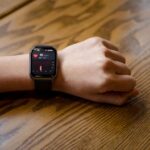
Après une ablation de la fibrillation atriale, un essai mené à Londres a détecté davantage de récidives, et plus rapidement, chez les patients équipés d’une Apple Watch. Le groupe suivi par la montre a aussi connu moins d’hospitalisations imprévues. Le poignet gagne une place dans le suivi, pas dans le fauteuil du cardiologue.
Après l’ablation, la montre ne baisse pas la garde
La fibrillation atriale, ou FA, peut réapparaître après une ablation par cathéter. L’intervention utilise la chaleur ou le froid pour créer de petites cicatrices dans le tissu cardiaque et empêcher les signaux électriques responsables du rythme irrégulier de circuler normalement. Les récidives restent parfois brèves, intermittentes et sans symptôme, ce qui les rend faciles à manquer entre deux consultations.
L’essai conduit au St Bartholomew’s Hospital de Londres a suivi 168 patients pendant douze mois. Tous avaient subi une ablation de la FA. Un groupe a reçu une Apple Watch Series 5 et devait réaliser un électrocardiogramme chaque jour, ainsi que lorsque la montre le demandait. L’autre groupe a bénéficié du suivi standard, avec des rendez-vous auprès d’un spécialiste du rythme cardiaque à trois, six et douze mois.
La montre n’est donc pas la variable principale à admirer ici. L’essai évalue surtout une méthode de surveillance régulière par ECG au poignet, avec un appareil déjà ancien, et non les performances d’une génération récente ou d’une fonction dopée à l’intelligence artificielle. Le protocole compte davantage que le modèle.
Le chiffre qui fait battre le tableau
Photo de Brandon Romanchuk sur Unsplash.
Après la période initiale de 90 jours, la première récidive confirmée a été détectée après un délai médian de 116 jours avec l’Apple Watchcontre 132 jours avec le suivi standard. L’écart ne bouleverse pas le calendrier, mais il devient plus parlant quand on regarde le nombre d’épisodes repérés.
Une récidive a été détectée chez 52,9 % des participants du groupe équipé, contre 34,9 % dans le groupe témoin. D’après l’interprétation rapportée pour l’essai, l’écart vient surtout des épisodes paroxystiques, qui apparaissent puis disparaissent avant le rendez-vous médical suivant. Une consultation ponctuelle peut tomber à côté. Un ECG réalisé régulièrement a davantage de chances de saisir l’épisode au moment où il survient.
Plus de récidives détectées ne signifie pas que la montre provoque davantage d’arythmies. Le résultat indique plutôt que le suivi par ECG au poignet repère des épisodes que le suivi standard laisse parfois passer. Confondre fréquence réelle et fréquence détectée serait une jolie façon de faire dire n’importe quoi à un graphique.
Moins d’urgences, plus de données au poignet
Le résultat le plus concret concerne les hospitalisations imprévues : 22 patients du groupe Apple Watch ont été concernés, contre 47 dans le groupe bénéficiant du suivi standard. Les nouvelles anomalies n’ont donc pas automatiquement déclenché une avalanche de passages aux urgences.
Les taux de nouvelle ablation sont restés similaires entre les deux groupes. L’intérêt du dispositif se situe donc surtout dans le tri et dans la rapidité de l’information transmise au parcours de soins. L’essai associe le suivi par montre à moins d’hospitalisations, mais il ne permet pas d’affirmer que la montre, à elle seule, en est la cause.
Le benchmark sort du jardin clos
L’essai londonien n’est pas le seul élément disponible. Dans une analyse publiée dans Europacedes chercheurs ont utilisé les données de surveillance continue d’un moniteur cardiaque implantable chez 346 patients après ablation. Ils ont ensuite simulé plusieurs algorithmes de montres connectées à partir de ces enregistrements.
La fonction Apple Watch AF Burden atteignait une sensibilité simulée de 82,2 % pour repérer une récidive, contre 70,6 % pour la notification de rythme irrégulier de l’Apple Watch. Les deux approches présentaient aussi une corrélation supérieure à 0,97 avec la charge de FA mesurée par le moniteur implantable. Elles dépassaient plusieurs stratégies de surveillance intermittente par Holter ou par patch.
Le mot à garder en tête reste « simulée ». Les chercheurs n’ont pas suivi 346 personnes portant ces montres dans leur vie quotidienne. Ils ont appliqué les algorithmes à des données enregistrées en continu. Le résultat documente un potentiel, pas une autorisation de transformer chaque notification en verdict médical. Le jardin clos d’Apple est peut-être bien entretenu, mais la cardiologie ne se résume pas à une courbe dans l’application Santé.
Quand l’algorithme tousse, le faux positif arrive
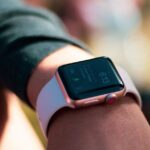
Photo de Alexander Grey sur Unsplash.
Une autre étude, publiée dans Scientific Reportsrappelle les limites d’une surveillance automatisée. Cet essai contrôlé randomisé monocentrique, baptisé CARE-DETECT, a suivi 150 patients à risque après une intervention cardiaque. Le groupe étudié utilisait une application pour smartphone deux fois par jour et un capteur placé sous le matelas. Le groupe témoin recevait les soins habituels.
Sur trois mois, une fibrillation atriale a été détectée chez 6 des 78 patients équipés, soit 7,7 %, contre aucun des 72 patients du groupe témoin. Parmi les participants ayant terminé cette période, 33 sur 68, soit 48,5 %, ont reçu au moins une alerte qui n’a pas abouti à une confirmation de FA par ECG.
Cette étude n’a pas testé l’Apple Watch. Elle montre néanmoins le problème général des dispositifs de surveillance : une alerte non confirmée peut ajouter du bruit au signal. Le temps de port, l’activité du patient, la brièveté des épisodes et la qualité du tracé influencent le résultat. Une montre oubliée sur son chargeur ne surveille rien, même avec la meilleure puce du monde.
Le poignet gagne une place, pas le cabinet
L’essai londonien suggère un rôle précis pour l’Apple Watch après une ablation. Elle ajoute une couche de surveillance entre deux rendez-vous, avec des ECG réalisés au moment où un épisode peut réellement se produire. L’étude ne montre pas qu’elle améliore l’efficacité de l’ablation et ne justifie pas de remplacer le suivi spécialisé.
Pour les équipes médicales, la chronologie peut aider : savoir qu’un épisode est apparu, quand il a commencé et s’il revient apporte des éléments supplémentaires pour la suite du parcours. Pour le patient, un tracé réalisé pendant un symptôme fugace peut éviter que l’épisode reste impossible à documenter.
Le gain le plus crédible est une détection plus fréquente et plus précoce dans un suivi médical structuré. La montre devient un capteur pratique, pas un cardiologue miniature. Le poignet a gagné une place. Le cabinet garde les clés.
Sources et références scientifiques
Marko Zivkovic. Apple Watch useful for detecting AFib after treatment, study reveals. 2026.
Randomized trial of smartphone application and bed sensor for atrial fibrillation detection in high-risk patients – PMC. Scientific reports. DOI: 10.1038/s41598-026-38273-5 · PMID: 41634330.
1.Davidson, K. W. et al. Screening for atrial fibrillation. JAMA327, 360 (2022). [DOI] [PubMed] [Google Scholar].
2.Turakhia, M. P. et al. Contemporary prevalence estimates of undiagnosed and diagnosed atrial fibrillation in the united States. Clin. Cardiol.46, 484-493 (2023). [DOI] [PMC free article] [PubMed] [Google Scholar].
3.Khurshid, S., Healey, J. S., McIntyre, W. F. & Lubitz, S. A. Population-Based screening for atrial fibrillation. Circ. Res.127, 143-154 (2020). [DOI] [PMC free article] [PubMed] [Google Scholar].
4.Van Gelder, I. C. et al. 2024 ESC guidelines for the management of atrial fibrillation developed in collaboration with the European association for Cardio-Thoracic surgery (EACTS). Eur. Heart J.45, 3314-3414 (2024). [DOI] [PubMed] [Google Scholar].
5.Joglar, J. A. et al. 2023 ACC/AHA/ACCP/HRS guideline for the diagnosis and management of atrial fibrillation: A report of the American college of Cardiology/American heart association joint committee on clinical practice guidelines. Circulation.149, e1-e156 (2024). [DOI] [PMC free article] [PubMed].
6.Corica, B. et al. Yield of diagnosis and risk of stroke with screening strategies for atrial fibrillation: a comprehensive review of current evidence. Eur. Heart J. Open.3, 1-13 (2023). [DOI] [PMC free article] [PubMed] [Google Scholar].
7.Lowres, N. et al. Estimated stroke risk, yield, and number needed to screen for atrial fibrillation detected through single time screening: a multicountry patient-level meta-analysis of 141,220 screened individuals. PLoS Med.16, e1002903 (2019). [DOI] [PMC free article] [PubMed] [Google Scholar].
8.Eranti, A. et al. Orthogonal P-wave morphology, conventional P-wave indices, and the risk of atrial fibrillation in the general population using data from the Finnish hospital discharge register. EP Europace. 22, 1173-1181 (2020). [DOI] [PubMed] [Google Scholar].
9.Liantinioti, C. et al. Potential utility of neurosonology in paroxysmal atrial fibrillation detection in patients with cryptogenic stroke. J. Clin. Med.8, 2002 (2019). [DOI] [PMC free article] [PubMed] [Google Scholar].
10.Martínez-Sellés, M. et al. Advanced interatrial block and P-wave duration are associated with atrial fibrillation and stroke in older adults with heart disease: the BAYES registry. EP Europace. 22, 1001-1008 (2020). [DOI] [PubMed] [Google Scholar].
11.Relander, A. et al. Novel electrocardiographic classification for stroke prediction in atrial fibrillation patients undergoing cardioversion. Heart Rhythm. 21, 2407-2418 (2024). [DOI] [PubMed] [Google Scholar].
12.Schnabel, R. B. et al. Early diagnosis and better rhythm management to improve outcomes in patients with atrial fibrillation: the 8th AFNET/EHRA consensus conference. EP Europace25, 6-27 (2023). [DOI] [PMC free article] [PubMed].
Wearable smartwatches for atrial fibrillation detection and burden estimation after ablation: comparison with continuous monitoring – PMC. Europace : European pacing, arrhythmias, and cardiac electrophysiology : journal of the working groups on cardiac pacing, arrhythmias, and cardiac cellular electrophysiology of the European Society of. DOI: 10.1093/europace/euaf280 · PMID: 41208416.
1. Linz D, Gawalko M, Betz K, Hendriks JM, Lip GYH, Vinter N et al. Atrial fibrillation: epidemiology, screening and digital health. Lancet Reg Health Eur 2024;37:100786. [DOI] [PMC free article] [PubMed] [Google Scholar].
2. Tzeis S, Gerstenfeld EP, Kalman J, Saad EB, Sepehri Shamloo A, Andrade JG et al. 2024 European Heart Rhythm Association/Heart Rhythm Society/Asia Pacific Heart Rhythm Society/Latin American Heart Rhythm Society expert consensus statement on catheter and surgical ablation of atrial fibrillation. Europace 2024;26:euae043. [DOI] [PMC free article] [PubMed] [Google Scholar].
3. Aguilar M, Macle L, Ditac G, Benali K, Honfo SH, Khairy P et al. Atrial fibrillation burden is underestimated by non-invasive monitoring: the CIRCA-DOSE trial. Eur Heart J 2025:ehaf647. [DOI] [PubMed] [Google Scholar].
4. Kalarus Z, Mairesse GH, Sokal A, Boriani G, Sredniawa B, Casado-Arroyo R et al. Searching for atrial fibrillation: looking harder, looking longer, and in increasingly sophisticated ways. An EHRA position paper. Europace 2023;25:185-98. [DOI] [PMC free article] [PubMed] [Google Scholar].
5. Aguilar M, Macle L, Deyell MW, Yao R, Hawkins NM, Khairy P et al. Influence of monitoring strategy on assessment of ablation success and postablation atrial fibrillation burden assessment: implications for practice and clinical trial design. Circulation 2022;145:21-30. [DOI] [PubMed] [Google Scholar].
6. Francisco A, Pascoal C, Lamborne P, Morais H, Goncalves M. Wearables and atrial fibrillation: advances in detection, clinical impact, ethical concerns, and future perspectives. Cureus 2025;17:e77404. [DOI] [PMC free article] [PubMed] [Google Scholar].
7. Dhingra LS, Aminorroaya A, Oikonomou EK, Nargesi AA, Wilson FP, Krumholz HM et al. Use of wearable devices in individuals with or at risk for cardiovascular disease in the US, 2019 to 2020. JAMA Netw Open 2023;6:e2316634. [DOI] [PMC free article] [PubMed] [Google Scholar].
8. Andrade JG, Champagne J, Dubuc M, Deyell MW, Verma A, Macle L et al. Cryoballoon or radiofrequency ablation for atrial fibrillation assessed by continuous monitoring: a randomized clinical trial. Circulation 2019;140:1779-88. [DOI] [PubMed] [Google Scholar].
9. Andrade JG, Deyell MW, Badra M, Champagne J, Dubuc M, Leong-Sit P et al. Randomised clinical trial of cryoballoon versus irrigated radio frequency catheter ablation for atrial fibrillation-the effect of double short versus standard exposure cryoablation duration during pulmonary vein isolation (CIRCA-DOSE): methods and rationale. BMJ Open 2017;7:e017970. [DOI] [PMC free article] [PubMed] [Google Scholar].
10.Inc A. Using Apple Watch for Arrhythmia Detection. 2025 date last accessed)..
11. Lubitz SA, Faranesh AZ, Selvaggi C, Atlas SJ, McManus DD, Singer DE et al. Detection of atrial fibrillation in a large population using wearable devices: the Fitbit Heart Study. Circulation 2022;146:1415-24. [DOI] [PMC free article] [PubMed] [Google Scholar].
12. Santala OE, Lipponen JA, Jantti H, Rissanen TT, Tarvainen MP, Laitinen TP et al. Continuous mHealth patch monitoring for the algorithm-based detection of atrial fibrillation: feasibility and diagnostic accuracy study. JMIR Cardio 2022;6:e31230. [DOI] [PMC free article] [PubMed] [Google Scholar].
Timing of insertable cardiac monitor implantation after embolic stroke of undetermined source and its impact on atrial fibrillation detection: A target trial emulation analysis – PMC. International journal of stroke : official journal of the International Stroke Society. DOI: 10.1177/17474930261438742 · PMID: 41877402.
1. GBD 2019 Stroke Collaborators. Global, regional, and national burden of stroke and its risk factors, 1990-2019: a systematic analysis for the Global Burden of Disease Study 2019. Lancet Neurol 2021; 20: 795-820. [DOI] [PMC free article] [PubMed] [Google Scholar].
2. Adams HP, Bendixen BH, Kappelle LJ, et al. Classification of subtype of acute ischemic stroke. Definitions for use in a multicenter clinical trial. TOAST. Trial of Org 10172 in acute stroke treatment. Stroke 1993; 24: 35-41. [DOI] [PubMed] [Google Scholar].
3. Ntaios G, Papavasileiou V, Milionis H, et al. Embolic strokes of undetermined source in the Athens stroke registry. Stroke 2015; 46: 176-181. [DOI] [PubMed] [Google Scholar].
4. Hart RG, Diener HC, Coutts SB, et al. Embolic strokes of undetermined source: the case for a new clinical construct. Lancet Neurol 2014; 13: 429-438. [DOI] [PubMed] [Google Scholar].
5. Ntaios G. Embolic stroke of undetermined source: JACC review topic of the week. J Am Coll Cardiol 2020; 75: 333-340. [DOI] [PubMed] [Google Scholar].
6. Kolominsky-Rabas PL, Weber M, Gefeller O, Neundoerfer B, Heuschmann PU. Epidemiology of ischemic stroke subtypes according to TOAST criteria. Stroke 2001; 32: 2735-2740. [DOI] [PubMed] [Google Scholar].
7. Connolly SJ, Ezekowitz MD, Yusuf S, et al. Dabigatran versus warfarin in patients with atrial fibrillation. New Engl J Med 2009; 361: 1139-1151. [DOI] [PubMed] [Google Scholar].
8. Giugliano RP, Ruff CT, Braunwald E, et al. Edoxaban versus warfarin in patients with atrial fibrillation. New Engl J Med 2013; 369: 2093-2104. [DOI] [PubMed] [Google Scholar].
9. Granger CB, Alexander JH, McMurray JJV, et al. Apixaban versus warfarin in patients with atrial fibrillation. New Engl J Med 2011; 365: 981-992. [DOI] [PubMed] [Google Scholar].
10. Patel MR, Mahaffey KW, Garg J, et al. Rivaroxaban versus warfarin in nonvalvular atrial fibrillation. New Engl J Med 2011; 365: 883-891. [DOI] [PubMed] [Google Scholar].
11. Van Gelder IC, Rienstra M, Bunting KV, et al. 2024 ESC guidelines for the management of atrial fibrillation developed in collaboration with the European Association for Cardio-Thoracic Surgery (EACTS). Eur Heart J 2024; 45: 3314-3414. [DOI] [PubMed] [Google Scholar].
12. Kalarus Z, Mairesse GH, Sokal A, et al. Searching for atrial fibrillation: looking harder, looking longer, and in increasingly sophisticated ways. An EHRA Position Paper. Europace 2023; 25: 185-198. [DOI] [PMC free article] [PubMed] [Google Scholar].
Empowering atrial fibrillation detection with TabPFN and SHAP interpretation based on ECG-derived features: a dual-center temporal validation study – PMC. BMC cardiovascular disorders. DOI: 10.1186/s12872-026-05936-0 · PMID: 42062911.
View in NLM Catalog.
Download.nbib.nbib.
Format: AMA APA MLA NLM.
AMA APA MLA NLM.
Ravi Teja KNTS. Apple Watch May Help Detect AFib After Treatment, Study Finds. 2026.
Paul Terpstra. Apple Watch Helps Detect AFib After Treatment, Study Finds. 2026.
Chance Miller. New study highlights Apple Watch’s role in AFib monitoring after treatment. 2026.
Bonjour ! Je suis Yves, un passionné de technologie et du web, âgé de 35 ans. J'adore explorer les innovations numérique et partager mes connaissances avec autrui. Mon objectif est d'aider chacun à naviguer dans l'univers digital avec aisance. Bienvenue sur mon site !
Nous utilisons des cookies pour vous garantir la meilleure expérience sur notre site web. Si vous continuez à utiliser ce site, nous supposerons que vous en êtes satisfait.