Le MacBook Pro M5 14 pouces passe à 1 447 dollars chez Amazon le 19 novembre 2025, soit 152 dollars de moins que son tarif conseillé. La remise est réelle, mais le MacBook Pro M4 à 1 299 dollars vient brouiller le calcul.
La puce M5 a fait ses débuts dans le MacBook Pro 14 pouces en octobre 2025. Neuf jours avant le Black Friday, prévu le 28 novembre 2025, le modèle argenté atteint 1 447 dollars, tandis que la finition noire reste à 1 449 dollars. Les marchands n’attendent donc pas la dernière ligne droite pour lancer les hostilités.
Le modèle M5 standard était affiché à 1 599 dollars. La réduction atteint donc 152 dollars, soit environ 9,5 %. La configuration ne change pas : 16 Go de mémoire unifiée et 512 Go de stockage SSD. Le prix baisse, la fiche de base reste exactement la même.
Le M5 prend la sortie, le prix aussi
Cette offre concerne le ticket d’entrée du MacBook Pro 14 pouces équipé de la puce Apple Silicon M5. Les 16 Go de mémoire unifiée forment une base adaptée à un usage polyvalent, tandis que les 512 Go de SSD imposent de surveiller l’espace disponible si les fichiers vidéo s’accumulent.
Une remise n’est pas un benchmark. Le tarif de 1 447 dollars ne permet pas, à lui seul, de chiffrer un gain en multicœur ou une autonomie réelle face au M4. La différence certaine tient ici à la génération de puce et à la date de commercialisation, pas à un score de test fourni avec l’offre. Une médaille de benchmark sous blister, donc, mais pas encore.
Le format 14 pouces, l’écran de la gamme Pro et la combinaison mémoire stockage restent inchangés dans cette configuration. Pour qui garde son portable plusieurs années, la génération la plus récente peut justifier un écart de prix, à condition que les 148 dollars supplémentaires ne fassent pas tousser le portefeuille.
M4 contre M5, le portefeuille fait son benchmark
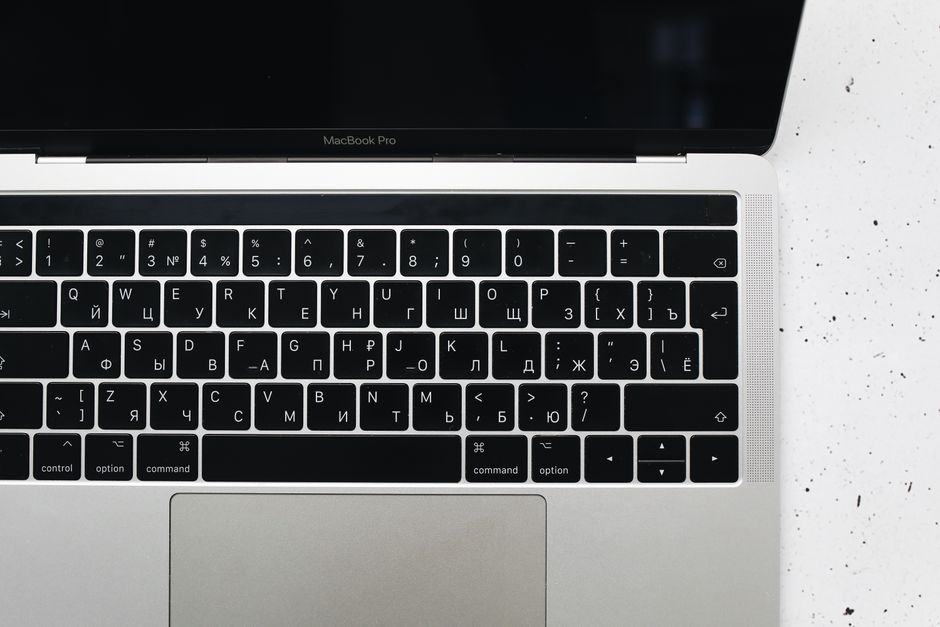
Photo de sur Pexels.
Le vrai grain de sable vient du MacBook Pro M4 14 pouces, proposé à 1 299 dollars dans une configuration identique de 16 Go de mémoire unifiée et 512 Go de stockage. L’écart avec le M5 s’établit à 148 dollars.
Le MacBook Pro M5 est la génération la plus récente. Le M4, lui, retire immédiatement 148 dollars de la facture sans réduire la mémoire ni le stockage. Pour un usage bureautique, créatif ou de développement qui ne réclame pas la dernière génération de puce, le modèle précédent garde donc une logique économique très solide.
À l’inverse, celui qui veut acheter le modèle le plus récent paie une différence mesurable et connaît précisément ce qu’il obtient : la même capacité mémoire, le même volume de stockage et une puce de génération M5. À ce niveau de prix, 148 dollars achètent surtout une génération de plus.
Le jardin clos fait les soldes
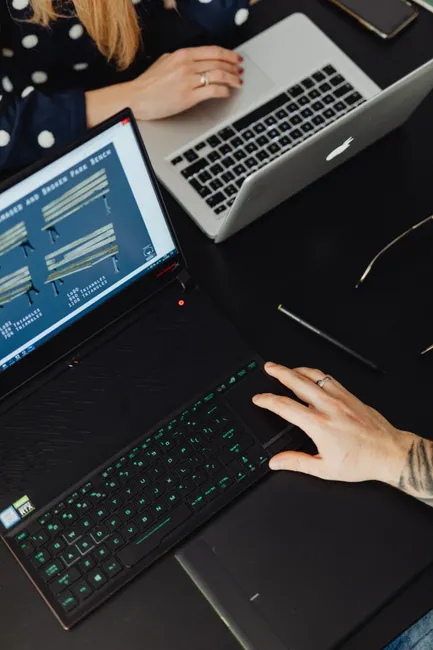
Photo de Giorgio Trovato sur Unsplash.
Cette promotion montre une mécanique commerciale familière chez Apple : le modèle récent conserve son tarif conseillé, puis le distributeur réduit la facture à l’approche d’une grande période d’achat. Le jardin clos reste fermé, mais Amazon en rabat ici le portail.
Les MacBook Pro équipés des puces M4 Pro et M4 Max peuvent aussi bénéficier de réductions allant jusqu’à 500 dollars, selon la configuration. Le montant final dépend alors bien davantage de la variante de puce, de la mémoire et du stockage que du simple passage d’une génération à l’autre.
Comparer uniquement M4 et M5 serait donc trop rapide. Un M4 Pro mieux équipé peut répondre à un besoin professionnel que le M5 standard ne vise pas, tandis qu’un utilisateur qui cherche simplement un portable récent risque de payer pour des ressources inutiles. Le nom de la puce ne suffit pas à départager deux machines.
Black Friday, black budget?
À 1 447 dollars, le MacBook Pro M5 devient plus défendable qu’à son lancement à 1 599 dollars. La remise de 152 dollars ne transforme pas le portable en affaire miraculeuse, mais elle réduit l’écart avec le M4 à 148 dollars, ce qui rend enfin la comparaison intéressante.
À 1 299 dollars, le M4 reste le choix rationnel pour économiser avec la même mémoire et le même stockage. À 1 447 dollars, le M5 s’adresse à celui qui préfère partir sur la génération la plus récente. Entre les deux, le portefeuille négocie sévère, pendant qu’Apple observe la scène depuis son fauteuil en aluminium.
La question n’est donc pas seulement de choisir entre M4 et M5, mais de déterminer combien vaut une génération supplémentaire pour l’usage prévu. Si la réponse tient dans 148 dollars, le M5 marque un point. Sinon, le dernier-né vient de se faire voler la vedette par son prédécesseur.
Sources et références scientifiques
Christine McKee. Apple's M5 MacBook Pro is on sale for record low $1,447, plus save up to $500. 2025.
Evaluating smartphone-based 3D imaging techniques for clinical application in oral and maxillofacial surgery: A comparative study with the vectra M5 – PMC. Oral and maxillofacial surgery. DOI: 10.1007/s10006-024-01322-2 · PMID: 39792225.
1.Kau CH, Richmond S, Incrapera A, English J, Xia JJ (2007) Three-dimensional surface acquisition systems for the study of facial morphology and their application to maxillofacial surgery. Robot Comput Surg 3:97-110. 10.1002/rcs.141 [DOI] [PubMed] [Google Scholar]. doi:10.1002/rcs.141.
2.Tzou C-HJ, Frey M (2011) Evolution of 3D Surface Imaging Systems in Facial Plastic Surgery. Facial Plastic Surgery Clinics of North America 19:591-602. 10.1016/j.fsc.2011.07.003 [DOI] [PubMed] [Google Scholar]. doi:10.1016/j.fsc.2011.07.003.
3.Nguyen C, Nicolai ESJ, He JJ, Roshchupkin GV, Corten EML (2022) 3D surface imaging technology for objective automated assessment of facial interventions: A systematic review. J Plast Reconstr Aesthet Surg 75:4264-4272. 10.1016/j.bjps.2022.06.086 [DOI] [PubMed] [Google Scholar]. doi:10.1016/j.bjps.2022.06.086.
4.Lekakis G, Claes P, Hamilton G, Hellings P (2016) Three-Dimensional Surface Imaging and the Continuous Evolution of Preoperative and Postoperative Assessment in Rhinoplasty. Facial Plast Surg 32:088-094. 10.1055/s-0035-1570122 [DOI] [PubMed] [Google Scholar]. doi:10.1055/s-0035-1570122.
5.Alfertshofer M, Frank K, Melnikov DV, Möllhoff N, Gotkin RH, Freytag DL et al (2021) Performing Distance Measurements in Curved Facial Regions: A Comparison between Three-Dimensional Surface Scanning and Ultrasound Imaging. Facial Plast Surg 37:395-399. 10.1055/s-0041-1725166 [DOI] [PubMed] [Google Scholar]. doi:10.1055/s-0041-1725166.
6.Jayaratne YSN, Zwahlen RA (2014) Application of Digital Anthropometry for Craniofacial Assessment. Craniomaxillofac Trauma Reconstr 7:101-107. 10.1055/s-0034-1371540 [DOI] [PMC free article] [PubMed] [Google Scholar]. doi:10.1055/s-0034-1371540.
7.Sforza C, Ulaj E, Gibelli DM, Allevi F, Pucciarelli V, Tarabbia F et al (2018) Three-dimensional superimposition for patients with facial palsy: an innovative method for assessing the success of facial reanimation procedures. Br J Oral Maxillofac Surg 56:3-7. 10.1016/j.bjoms.2017.11.015 [DOI] [PubMed] [Google Scholar]. doi:10.1016/j.bjoms.2017.11.015.
8.Yamada T, Mishima K, Moritani N, Janune D, Matsumura T, Ikeya Y et al (2010) Nasolabial Morphologic Changes After a Le Fort I Osteotomy: A Three-Dimensional Anthropometric Study. J Craniofac Surg 21:1089-1095. 10.1097/SCS.0b013e3181e1e6ff [DOI] [PubMed] [Google Scholar]. doi:10.1097/SCS.0b013e3181e1e6ff.
9.Tzou C-HJ, Artner NM, Pona I, Hold A, Placheta E, Kropatsch WG et al (2014) Comparison of three-dimensional surface-imaging systems. J Plast Reconstr Aesthet Surg 67:489-97. 10.1016/j.bjps.2014.01.003 [DOI] [PubMed] [Google Scholar]. doi:10.1016/j.bjps.2014.01.003.
10.Van Der Vlis M, Dentino KM, Vervloet B, Padwa BL (2014) Postoperative Swelling After Orthognathic Surgery: A Prospective Volumetric Analysis. J Oral Maxillofac Surg 72:2241-2247. 10.1016/j.joms.2014.04.026 [DOI] [PubMed] [Google Scholar]. doi:10.1016/j.joms.2014.04.026.
11.Alhazmi B, Alshomer F, Alazzam A, Shehabeldin A, Almeshal O, Kalaskar DM (2022) Digital workflow for fabrication of bespoke facemask in burn rehabilitation with smartphone 3D scanner and desktop 3D printing: clinical case study. 3D Print Med 8:12. 10.1186/s41205-022-00140-0 [DOI] [PMC free article] [PubMed] [Google Scholar]. doi:10.1186/s41205-022-00140-0.
12.Weissler JM, Stern CS, Schreiber JE, Amirlak B, Tepper OM (2017) The Evolution of Photography and Three-Dimensional Imaging in Plastic Surgery. Plast Reconstr Surg 139:761-769. 10.1097/PRS.0000000000003146 [DOI] [PubMed] [Google Scholar]. doi:10.1097/PRS.0000000000003146.
Comparison of the Usability of Apple M2 and M1 Processors for Various Machine Learning Tasks – PMC. Sensors (Basel, Switzerland). DOI: 10.3390/s23125424 · PMID: 37420589.
1.Angra S., Ahuja S. Machine learning and its applications: A review; Proceedings of the 2017 International Conference on Big Data Analytics and Computational Intelligence (ICBDAC); Chirala, India. 23-25 March 2017; Piscataway, NJ, USA: IEEE; 2017. pp. 57-60. [Google Scholar].
2.Shinde P.P., Shah S. A review of machine learning and deep learning applications; Proceedings of the 2018 Fourth International Conference on Computing Communication Control and Automation (ICCUBEA); Pune, India. 16-18 August 2018; Piscataway, NJ, USA: IEEE; 2018. pp. 1-6. [Google Scholar].
rtolini M., Mezzogori D., Neroni M., Zammori F. Machine Learning for industrial applications: A comprehensive literature review. Expert Syst. Appl. 2021;175:114820. doi: 10.1016/wa.2021.114820. [DOI] [Google Scholar]. doi:10.1016/j.eswa.2021.114820.
oi J.A., Lim K. Identifying machine learning techniques for classification of target advertising. ICT Express. 2020;6:175-180. doi: 10.1016/j.icte.2020.04.012. [DOI] [Google Scholar]. doi:10.1016/j.icte.2020.04.012.
5.Shah N., Engineer S., Bhagat N., Chauhan H., Shah M. Research trends on the usage of machine learning and artificial intelligence in advertising. Augment. Hum. Res. 2020;5:1-15. doi: 10.1007/s41133-020-00038-8. [DOI] [Google Scholar]. doi:10.1007/s41133-020-00038-8.
6.Nawrocka A., Kot A., Nawrocki M. Application of machine learning in recommendation systems; Proceedings of the 2018 19th International Carpathian Control Conference (ICCC); Szilvasvarad, Hungary. 28-31 May 2018; Piscataway, NJ, USA: IEEE; 2018. pp. 328-331. [Google Scholar].
7.Aye G.A., Kim S., Li H. Learning autocompletion from real-world datasets; Proceedings of the 2021 IEEE/ACM 43rd International Conference on Software Engineering: Software Engineering in Practice (ICSE-SEIP); Madrid, Spain. 25-28 May 2021; Piscataway, NJ, USA: IEEE; 2021. pp. 131-139. [Google Scholar].
8.Kolb S., Teso S., Dries A., De Raedt L. Predictive spreadsheet autocompletion with constraints. Mach. Learn. 2020;109:307-325. doi: 10.1007/s10994-019-05841-y. [DOI] [Google Scholar]. doi:10.1007/s10994-019-05841-y.
9.Ramesh A., Dhariwal P., Nichol A., Chu C., Chen M. Hierarchical text-conditional image generation with clip latents. arXiv. 20222204.06125 [Google Scholar].
10.Roose K. An AI-Generated Picture Won an Art Prize. Artists Aren’t Happy. New York Times. Sep 2, 2022..
11.Das S., Dey A., Pal A., Roy N. Applications of artificial intelligence in machine learning: Review and prospect. Int. J. Comput. Appl. 2015;115:31-41. doi: 10.5120/20182-2402. [DOI] [Google Scholar]. doi:10.5120/20182-2402.
12.Alpaydin E. Machine Learning: The New AI. MIT Press; Cambridge, MA, USA: 2016. [Google Scholar].
Comparison of the Usability of Apple M1 Processors for Various Machine Learning Tasks – PMC. Sensors (Basel, Switzerland). DOI: 10.3390/s22208005 · PMID: 36298358.
1.Duan Y., Edwards J.S., Dwivedi Y.K. Artificial intelligence for decision making in the era of Big Data-evolution, challenges and research agenda. Int. J. Inf. Manag. 2019;48:63-71. doi: 10.1016/j.ijinfomgt.2019.01.021. [DOI] [Google Scholar]. doi:10.1016/j.ijinfomgt.2019.01.021.
2.Pratt I. Artificial Intelligence. Red Globe Press; London, UK: 1994. [DOI] [Google Scholar].
3.McCarthy J. What Is Artificial Intelligence? 2007. [(accessed on 1 October 2022)]. Available online:.
4.Pannu A. Artificial intelligence and its application in different areas. Artif. Intell. 2015;4:79-84. [Google Scholar].
5.Ray S. A quick review of machine learning algorithms; Proceedings of the 2019 International Conference on Machine Learning, Big Data, Cloud and Parallel Computing (COMITCon); Faridabad, India. 14-16 February 2019; pp. 35-39. [Google Scholar].
6.Salomon G., Perkins D.N., Globerson T. Partners in cognition: Extending human intelligence with intelligent technologies. Educ. Res. 1991;20:2-9. doi: 10.3102/0013189X020003002. [DOI] [Google Scholar]. doi:10.3102/0013189X020003002.
7.Fuller S. When history outsmarts computers. Futures. 2003;35:769-772. doi: 10.1016/S0016-3287(03)00027-2. [DOI] [Google Scholar]. doi:10.1016/S0016-3287(03)00027-2.
8.Wilamowski B.M. Can computers be more intelligent than humans?; Proceedings of the 2011 4th International Conference on Human System Interactions, HSI 2011; Yokohama, Japan. 19-21 May 2011; pp. 22-29. [Google Scholar].
9.Rosett C.M., Hagerty A. Introducing HR Analytics with Machine Learning. Springer Nature; Berlin, Germany: 2021. Why Now? Computers Enable a Future with Machine Learning; pp. 95-105. [Google Scholar].
Cremer D., Kasparov G. AI should augment human intelligence, not replace it. [(accessed on 1 October 2022)];Harv. Bus. Rev. 2021 18 Available online: [Google Scholar].
11.Kelty-Stephen D.G., Cisek P.E., De Bari B., Dixon J., Favela L.H., Hasselman F., Keijzer F., Raja V., Wagman J.B., Thomas B.J., et al. In search for an alternative to the computer metaphor of the mind and brain. arXiv. 20222206.04603 [Google Scholar].
Garis H., Shuo C., Goertzel B., Ruiting L. A world survey of artificial brain projects, Part I: Large-scale brain simulations. Neurocomputing. 2010;74:3-29. doi: 10.1016/j.neucom.2010.08.004. [DOI] [Google Scholar]. doi:10.1016/j.neucom.2010.08.004.
Bonjour ! Je suis Yves, un passionné de technologie et du web, âgé de 35 ans. J'adore explorer les innovations numérique et partager mes connaissances avec autrui. Mon objectif est d'aider chacun à naviguer dans l'univers digital avec aisance. Bienvenue sur mon site !
Nous utilisons des cookies pour vous garantir la meilleure expérience sur notre site web. Si vous continuez à utiliser ce site, nous supposerons que vous en êtes satisfait.